

Magnetic Chucks & Fixtures
Magnetic chucks and fixtures for fast setup on flat ferrous parts.
Magnetic holding for flat ferrous parts where setup time is the cost, not the fixture. It suits grinding and light milling; it does not suit non-ferrous or heavy interrupted cuts.
How we make it: Custom CNC parts service →
3–5 weeks
1 piece
ISO 9001:2015
Technical Specifications
| Parameter | Value | Unit |
|---|---|---|
| Holding force | To 100 | N/cm² |
| Face flatness | 0.02 | mm |
| Materials | Ferrous only | note |
| Pole pitch | Standard or fine | - |
| Switching | Mechanical or electrical | - |
| Max size | 600 × 300 | mm |
Available Materials
- Steel 1045
- Permanent magnets (in-house assembled)
- Stainless 304 (non-magnetic parts)
- Aluminium (bodies)
Typical Applications
- Surface grinding
- Plate milling
- Weld positioners
- Inspection holding
- Deburr and finishing
Surface Finishes
- Ground top face
- Painted body
- Machined pole pieces
- Laser marked size
Industries Served
- Tooling & Mould Making
- Industrial Equipment
- Automotive & EV
- Aerospace
- Mining & Construction
What drives the price of this part
Derived from the callouts on this page. Where a driver is not on the drawing, it is not on this list.
- Tolerance
- Face flatness at 0.02 mm is the tightest callout this family carries. Tightening a callout is a process decision, not a machining decision: below the standard ±0.005 mm the work moves to grinding or jig boring, and the price moves with it.
- Part size
- Max size at 600 × 300 mm decides which machine the part lands on and how many setups it needs. Size is the driver buyers most often leave out of a first enquiry, and it is the one that changes the quote fastest.
- Material
- The first material listed, Carbon Steel 1045 (C45), rates 6/10 on our machinability scale at 179 HB (as-rolled) · 45–55 HRC hardened. On this shop's scale a harder alloy means slower passes and more tool changes, and that is cycle time the quote has to carry.
- Order size
- Minimum order is 1 piece, so on a first order setup and programming are spread over very few parts and they are most of the price. Repeat orders at the same quantity are cheaper without anything on the drawing changing.
See how cycle time is calculated in the machining time calculator and what else moves a price in the cost driver reference.
How these parts are inspected
Matched to the callouts above and the instruments actually on the floor.
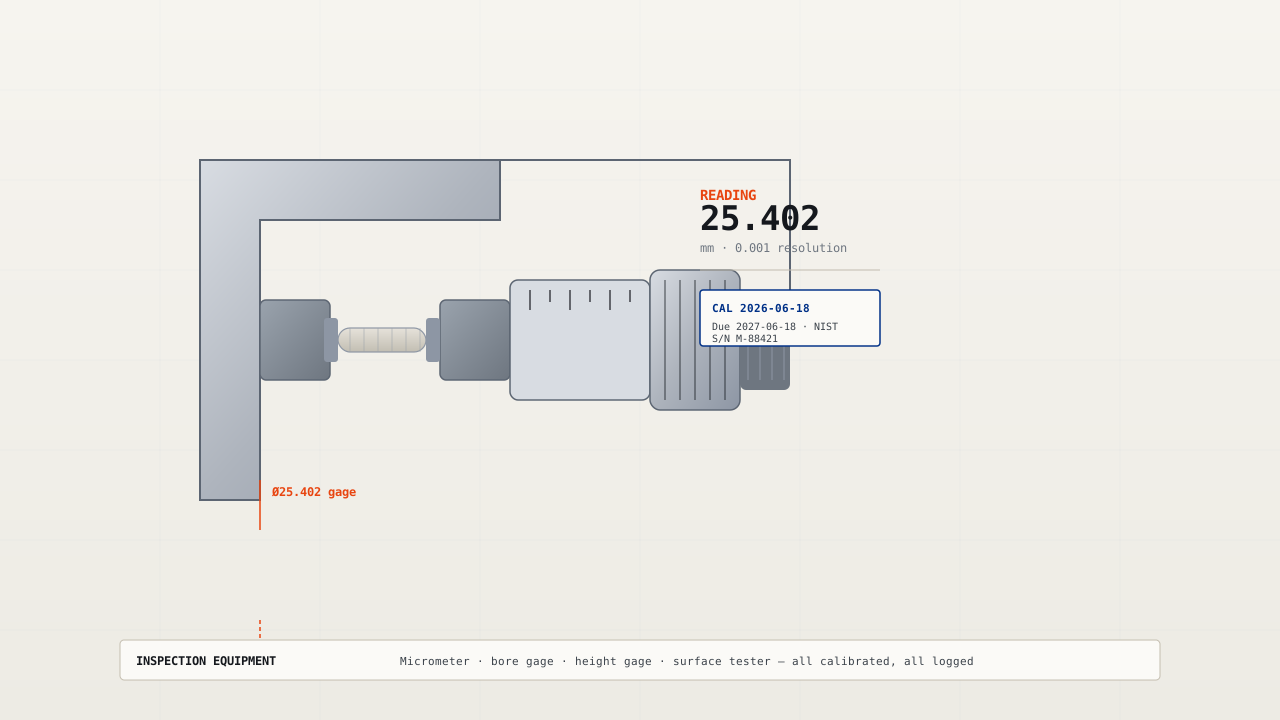
- Coordinate measuring machine (Zeiss CONTURA G2, two machines, GR&R 8.4% on the critical feature)
- Dimensional report against the drawing, with a 100% check on critical features rather than a sample
- Certificate of conformance and the mill certificate with every shipment
The full equipment list, with counts, is on the capability page; the inspection sequence is on quality and inspection.
Questions buyers ask
- What stops a magnetic chuck from being used everywhere?
- Material and cut type. It only holds ferrous parts, and a heavy interrupted cut can slide the part - magnets resist lifting far better than they resist sliding.
Related part families
Workholding Fixtures
Machining fixtures that locate on the casting or forging datum, repeatable to 0.02 mm.
Soft Jaws & Chuck Jaws
Soft jaws machined to your part profile, for holding finished or odd-shaped work without marking.
Modular Fixtures
Grid-plate and modular fixture kits that reuse across part families.