

Valve Assemblies
Machined valve bodies with lapped seats, assembled and bubble-tight tested at the working pressure.
Valve bodies and internals machined as a matched set, with the seat lapped to the plug so the seal is metal-to-metal. Bubble-tight tested at 1.1× working pressure with the result logged.
5–8 weeks
10 pieces
ISO 9001:2015
Technical Specifications
| Parameter | Value | Unit |
|---|---|---|
| Seat leakage | Bubble tight | at 1.1× WP |
| Seat flatness | 0.002 | mm |
| Stem runout | 0.01 | mm TIR |
| Body test | 1.5× WP hydrostatic | - |
| Threads | NPT / BSPP / UNF | - |
| Traceability | Heat numbers recorded | - |
Available Materials
- Stainless 316L
- Stainless 17-4 PH (stems)
- Bronze C932
- Monel 400
- PTFE / PEEK seats
Typical Applications
- Process isolation valves
- Control valve trim
- Check valves
- Manifold blocks
- Instrument valves
Surface Finishes
- Lapped seats
- Passivate
- Electropolish (hygienic)
- Stellite facing (outsourced)
- Internal flush
Industries Served
- Energy & Oil & Gas
- Chemical Processing
- Power Generation
- Food Processing
- Pharmaceutical
What drives the price of this part
Derived from the callouts on this page. Where a driver is not on the drawing, it is not on this list.
- Tolerance
- Seat flatness at 0.002 mm is the tightest callout this family carries. Tightening a callout is a process decision, not a machining decision: below the standard ±0.005 mm the work moves to grinding or jig boring, and the price moves with it.
- Material
- The first material listed, Stainless Steel 316L, rates 3/10 on our machinability scale at 217 HB. On this shop's scale a harder alloy means slower passes and more tool changes, and that is cycle time the quote has to carry.
- Order size
- Minimum order is 10 pieces, so on a first order setup and programming are spread over very few parts and they are most of the price. Repeat orders at the same quantity are cheaper without anything on the drawing changing.
See how cycle time is calculated in the machining time calculator and what else moves a price in the cost driver reference.
How these parts are inspected
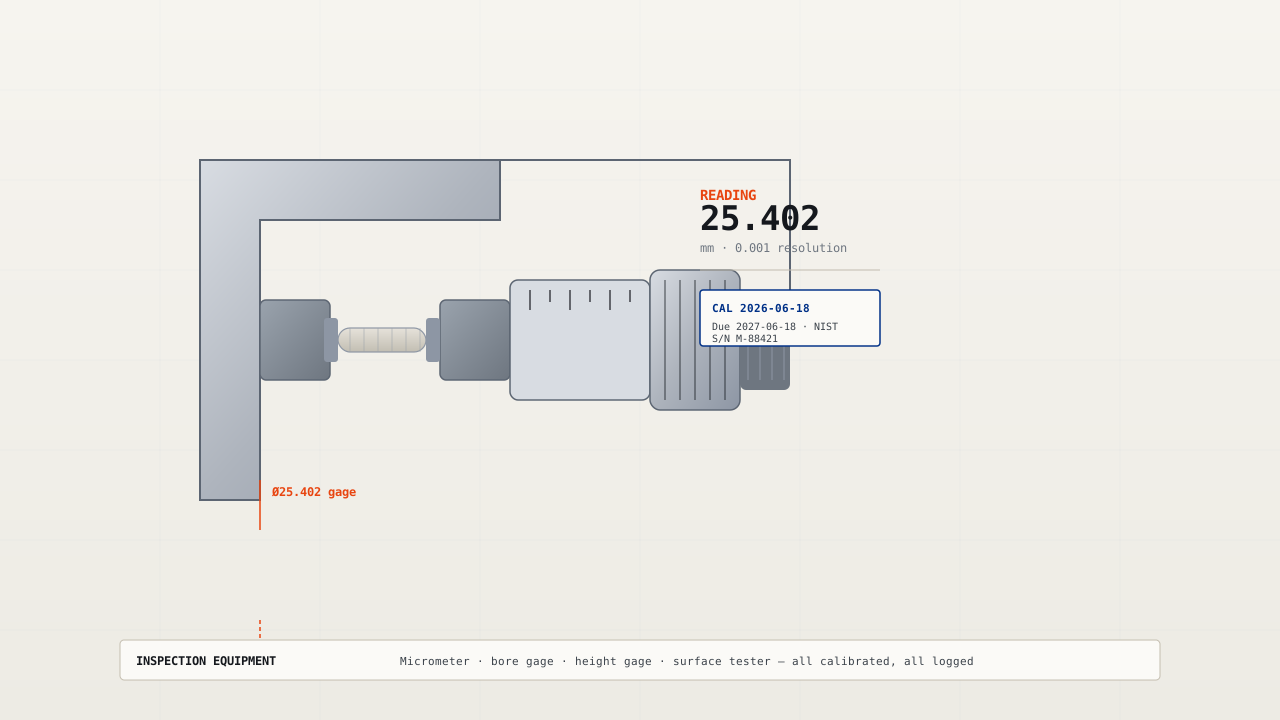
Matched to the callouts above and the instruments actually on the floor.
- Coordinate measuring machine (Zeiss CONTURA G2, two machines, GR&R 8.4% on the critical feature)
- Dimensional report against the drawing, with a 100% check on critical features rather than a sample
- Certificate of conformance and the mill certificate with every shipment
- Thread gauges over the full thread range on the drawing
The full equipment list, with counts, is on the capability page; the inspection sequence is on quality and inspection.
Questions buyers ask
- Metal or soft seats?
- Metal for temperature and chemical resistance, soft for bubble-tight at low pressure. A metal seat needs the plug lapped to its own body to seal; a soft seat will seal against a decent finish.
- How do you test seat tightness?
- Air or nitrogen on one side, water on the other, and we count bubbles for a set time at 1.1× working pressure. The count and the pressure go on the record.
Related part families
Hydraulic Manifolds
Machined manifolds with cross-drilled galleries, pressure tested to 350 bar before shipping.
Pump Assemblies
Machined and assembled pump bodies with matched clearances, tested for flow and leak before shipping.
Assembled Sub-Assemblies
Machined, plated, inspected and kitted as one part number, with the tolerance stack-up owned in one place.