

Brass Machined Components
C360 free-cutting brass parts at high volume, with threads and knurls formed in one pass.
Brass for small parts where cycle time dominates - fittings, inserts, electrical components. It machines faster than anything else in the shop and takes a thread cleanly.
How we make it: Precision CNC machining service →
2–4 weeks
500 pieces
ISO 9001:2015
Technical Specifications
| Parameter | Value | Unit |
|---|---|---|
| Diameter tolerance | ±0.005 | mm |
| Surface roughness | Ra 0.4 | µm |
| Max bar diameter | Ø60 | mm |
| Thread range | M2–M30 | metric |
| Cycle advantage | Fastest material | note |
| Lead content | C360 contains lead | note |
Available Materials
- Brass C360 (free-cutting)
- Brass C260
- Bronze C932
- Copper C110
Typical Applications
- Pneumatic fittings
- Electrical terminals
- Threaded inserts
- Valve bodies
- Instrument parts
Surface Finishes
- As-machined
- Nickel plating
- Tin plating
- Vibratory polish
- Lacquer
Industries Served
- Hydraulics & Pneumatics
- Consumer Electronics
- Instrumentation
- Water Treatment
- Automotive & EV
What drives the price of this part
Derived from the callouts on this page. Where a driver is not on the drawing, it is not on this list.
- Tolerance
- Diameter tolerance at ±0.005 mm is the tightest callout this family carries. Tightening a callout is a process decision, not a machining decision: below the standard ±0.005 mm the work moves to grinding or jig boring, and the price moves with it.
- Part size
- Max bar diameter at Ø60 mm decides which machine the part lands on and how many setups it needs. Size is the driver buyers most often leave out of a first enquiry, and it is the one that changes the quote fastest.
- Surface finish
- Surface roughness at Ra 0.4 µm. Every step below the ordinary as-machined Ra 1.6 µm adds a finishing pass; a callout on a face nobody touches is the most common over-specification we quote.
- Order size
- Minimum order is 500 pieces, where setup and tooling are amortised across the batch and per-part cost settles around cycle time and material. Below that quantity the same part costs more per piece, not less.
See how cycle time is calculated in the machining time calculator and what else moves a price in the cost driver reference.
How these parts are inspected
Matched to the callouts above and the instruments actually on the floor.
- Coordinate measuring machine (Zeiss CONTURA G2, two machines, GR&R 8.4% on the critical feature)
- Dimensional report against the drawing, with a 100% check on critical features rather than a sample
- Certificate of conformance and the mill certificate with every shipment
- Surface roughness tester (Mitutoyo) against the Ra callout
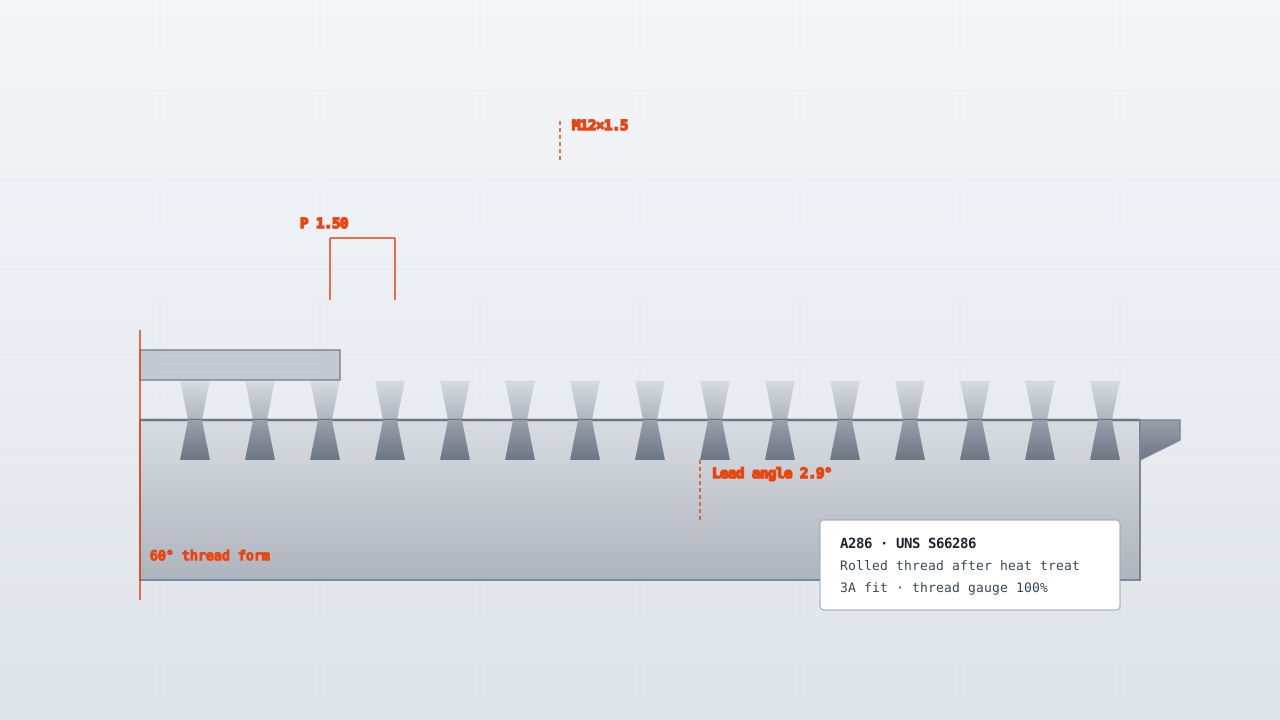
- Thread gauges over the full thread range on the drawing
The full equipment list, with counts, is on the capability page; the inspection sequence is on quality and inspection.
Questions buyers ask
- Can C360 brass be used in drinking water?
- Not in most markets, because of the lead content. Specify C260 or a lead-free grade for potable water, and we will adjust the feeds for the slower-cutting material.
Related part families
CNC Machined Bushings
Machined bushings, sleeves and spacers with bored IDs held to H7, flanged on request.
Precision Turned Components
Turned parts with live tooling - flats, cross-holes and threads in one setup, ±0.005 mm.
Swiss-Turned Parts
Small-diameter long parts turned on Swiss-type lathes, holding 0.005 mm without deflection.