

How Surface Finishing Is Priced: Anodizing Cost, Lot Charges and Masking
Why the anodizing line barely moves between ten parts and a hundred, what a lot charge actually buys, and where masking quietly becomes the largest number on the sheet.
A finishing charge is three numbers stacked up
Surface finishing looks like one line on a quote. It is three, and they behave differently.
First there is the load: the tank cycle or the furnace cycle, priced once per batch no matter how many parts are on the rack. Then there is the labour, which is per part and is the part everybody underestimates: racking, jigging, masking, unloading, inspecting the film. Then the consumable, the anodizing bath chemistry, the plating salt, the powder, the quench oil. Add freight to the processor if the work goes out, which on a small run can be a visible line of its own.
Because the load is fixed and the labour is per part, a finishing line does not scale the way machining does. That single fact explains most of the arguments about finishing prices.
Why the number barely moves between ten parts and a hundred
Take a small anodizing line with a minimum load charge around 150 dollars and racking at roughly a dollar a part. Ten parts is one load: about 160 dollars, call it sixteen dollars a part. A hundred parts is three loads: around 450 dollars plus a hundred in racking, five hundred and fifty, or five fifty a part.
The per-part price fell by two thirds while the total charge rose by less than four times. That is the shape of every batch process. On a small quantity you are mostly buying the load, and the load does not care how few parts are on it.
This is also why a finishing quote that arrives after the machining, as a separate purchase, tends to look wrong. It is not necessarily wrong. It is the load charge landing on a small quantity with nobody amortising it.
Racking is the labour nobody expects
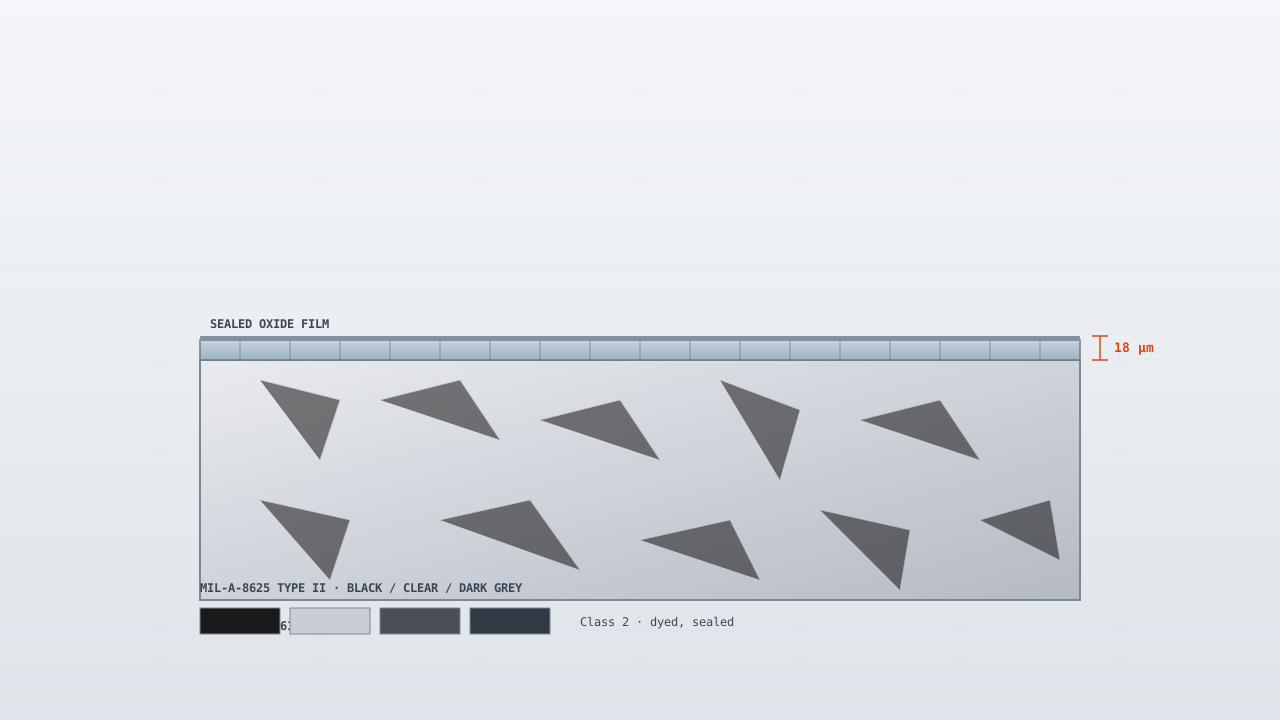
Anodizing parts are hung on a rack and wired or clamped individually, because each part needs an electrical contact and a position in the tank where the electrolyte can reach it. On a simple bracket that is a few seconds a part. On a long extrusion, a thin plate or a part with a deep pocket where the electrolyte has to circulate, it is minutes.
The contact point matters commercially as well as technically. It leaves a small area that is not anodized, and if that lands on a cosmetic face or a sealing surface, somebody will reject the part. Good shops are told where the contact mark is allowed, which is a sentence on the drawing and a decision at design time.
Loading density is the other half. A rack half full because the parts are awkward costs the same load charge as a full one, so awkward geometry quietly raises the effective price of finishing that geometry.
Masking is often the biggest line, and it is rarely quoted separately
Masking is how you keep a coating off a thread, a bore, a bearing seat, a sealing face or an electrical contact surface. It is done with plugs, caps, tape or a lacquer that is applied by hand and stripped afterwards. It is all labour, and on a part with several masked features it can cost more than the coating itself.
This is where a design decision becomes a price. A part with a masked internal thread, a masked bearing bore and a masked face has three operations that each need doing and undoing on every part in the batch. A part where the same functions are served by a machined relief, a masking-friendly geometry or a decision to coat the whole surface and machine afterwards can be dramatically cheaper to finish.
The mask line is also a physical step in the coating. If it lands in the middle of a sealing face, the step becomes a leak path, so the mask boundary belongs on the drawing with a dimension, not in a note.
Barrel, rack or furnace: match the part to the process
Barrel plating loads parts loose in a rotating drum. There is no racking labour, so the per-part cost is far lower, which is why small fasteners and simple fittings are cheap to plate. The limits are real: the parts have to be small enough to tumble, robust enough to survive tumbling, and have no surface where a tumbled contact mark or a nicked edge is unacceptable. A precision bore or a cosmetic face disqualifies a part from the barrel.
Rack plating is the opposite. Every part is hung, so labour is higher and the finish is more uniform, and it is the only option for a large part, a heavy part or anything with a critical surface.
Heat treatment is priced per furnace load, and the load is often driven by the furnace rather than the part count, so a single prototype can cost the same to treat as twenty parts. Where the treatment is a case-hardening cycle rather than a through-hardening one, the depth of case is bought in time at temperature, which is a different and slower kind of cost.
Anodizing is always racked. It is an electrochemical conversion of the surface, so the part has to be in electrical contact, and the contact area stays bare. That is a process characteristic to design around, not a supplier fault.
The coating changes the dimension, so it changes the drawing
This is the part that turns a finishing decision into a tolerance problem. Anodizing grows the part by roughly half the coating thickness on each surface, because the oxide occupies more volume than the aluminium it replaces. Electroless nickel adds its full thickness on every surface, inside bores as well as outside. Powder coat is 60 to 100 micrometres, thick enough to close a close-fitting joint.
A bore closes by twice the per-surface figure, because both walls approach the center. On a 20 mm H7 bore with a 20 micrometre electroless nickel coating, the bore closes about 40 micrometres against a tolerance of 30. The part cannot be made to the drawing as written, and the fix has to happen before the parts are machined, not after they come back from the plater.
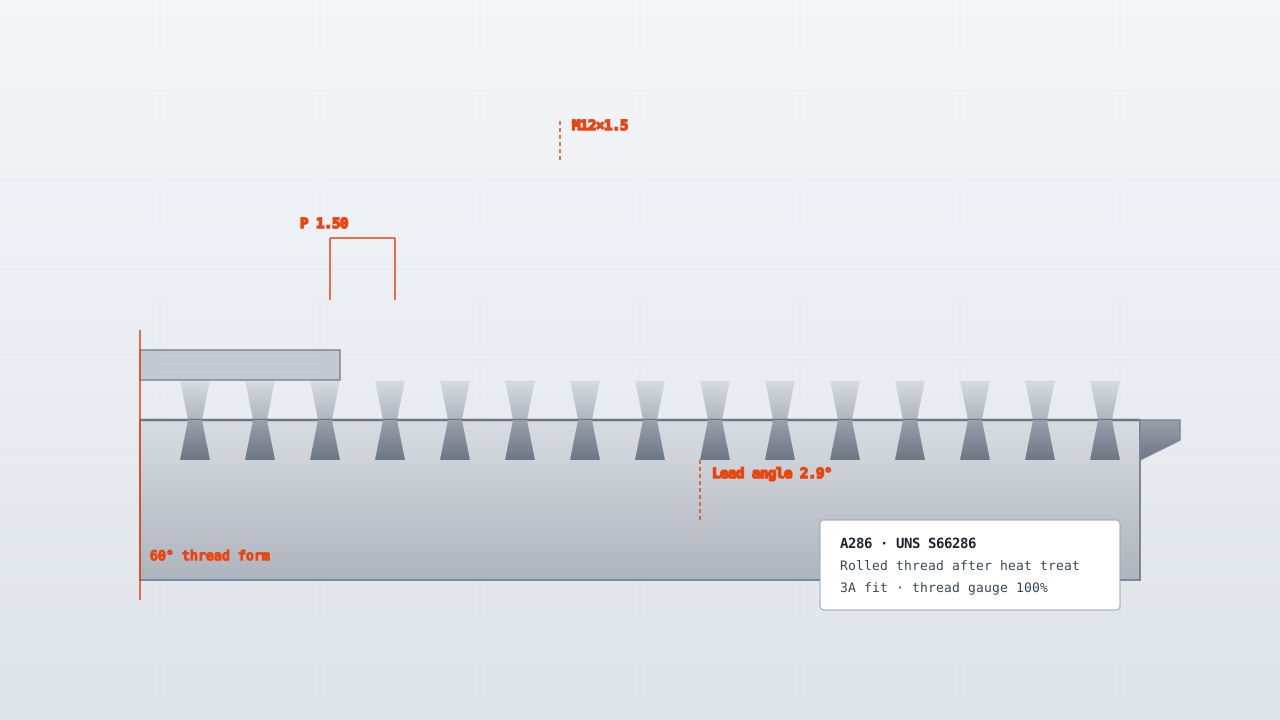
Threads are the other casualty. A coated thread changes pitch diameter, so a thread that must function is either masked, or machined undersize by the coating allowance, and either way that has to be on the drawing. Hard anodizing an unmodified thread is a reliable way to produce a fastener that will not start.
Five design decisions that move this number
One. Decide whether the finish is functional or cosmetic. A cosmetic finish on a face that is hidden in the assembly is a cost with no benefit, and it is easy to remove at the drawing stage.
Two. Show the mask on the drawing. A masked thread, a masked bore and a masked sealing face each cost a hand operation per part, so a shop needs to know before it quotes, not after.
Three. Choose a finish that batches well if the part suits it. A coating applied by the load is cheap per part on volume and expensive on a one-off, so the timing of the order matters as much as the choice of finish.
Four. Buy the finish with the run, not afterwards. Finishing is a batch operation with a freight leg. Sending ten parts now and ninety later pays the minimum twice.
Five. Where a critical feature cannot be coated, provide the geometry that lets it be masked cleanly, or specify the under-machine allowance that lets the coated dimension land in tolerance.
Straight answers
Why is anodizing so expensive for ten parts? Because the bath cycle is a load charge. One load costs the same whether it carries ten parts or forty, and on a small quantity that fixed charge dominates the per-part price.
What is a lot charge in plating? The minimum a processor bills for a batch. It covers the tank or furnace cycle, the handling and the setup, regardless of how few parts are in it. It is why a small order can price out at the processor's minimum rather than at a per-part rate.
Does anodizing have a minimum charge? In practice yes, at every job shop, because the load has a cost. It is a load minimum, not a per-part minimum, which is why adding parts to an order is usually cheap and splitting an order is expensive.
Is barrel plating cheaper than rack plating? Yes, substantially, because there is no racking labour. But the parts must be small, able to tumble without damage and free of critical cosmetic or sealing surfaces. A part with a precision bore belongs on a rack.
Does masking cost extra? Yes, and it is labour, so it scales with the number of parts rather than with the number of loads. On a part with several masked features, masking can exceed the cost of the coating itself.
This article is about what finishing costs and why the number behaves the way it does. If you are still choosing the finish itself, the guide below covers which process suits which material and function, and it is the better place to start.
Want the finishing line broken out before you commit?
Send the drawing and the quantity. We will tell you which finish batches well for that part, where the mask will need to go, and what the coating does to the dimensions before anything is cut.
Related reading: how to read the rest of the quote, what drives machining cost overall, 6061-T6 and where anodizing applies, and what ships with every order.